TL;DR: Early neuropathy in feet symptoms often start with tingling or numbness in the toes, especially at night. When these sensations spread evenly from the toes toward the calves, they may indicate peripheral nerve damage, often related to metabolic conditions. Early evaluation can help identify the cause and prevent further nerve damage.
Small nerve fibers in the lower extremities are highly vulnerable to metabolic stress. Ignoring early sensory changes allows the underlying damage to spread to larger motor nerves. Timely evaluation separates reversible irritation from permanent nerve death.
Early nerve damage typically begins with prickling, burning, or numbness that starts in the toes and spreads upward. Key signs to watch for:
Patients in Jacksonville managing diabetic neuropathy often present after months of adjusting around symptoms rather than reporting them. Most people report the sensory changes and skip the motor symptoms. A neurologist asks about both. The combination points to something the individual pieces do not.
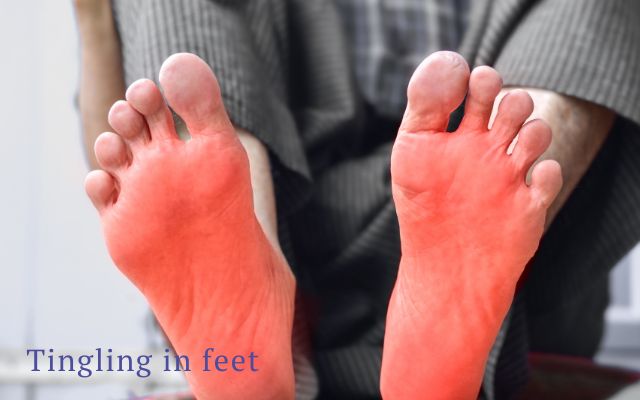
Small fiber damage triggers spontaneous pain signals. The nerve endings fire without any actual physical stimulus. This feels like a sharp, jabbing, or burning pain in the skin. The intense burning often focuses on the soles of the feet. This specific fiber failure requires specialized testing to detect.
Large fiber damage reduces your ability to feel texture and vibration. You might feel like you are wearing tight socks when your feet are bare. This numbness makes it difficult to feel temperature changes. You can easily burn your feet in hot water without realizing it. Large fiber issues show up clearly on standard.
Your feet stop telling your brain where they are in space. You might stumble in the dark. Walking on uneven grass becomes a conscious effort. (If you have been adjusting your gait for months to compensate for foot drop, that adaptation is masking a motor nerve problem that needs immediate evaluation.) Motor involvement is a late-stage warning sign.

Peripheral neuropathy symptoms follow a predictable length-dependent pattern in many cases. The damage begins at the tips of the longest nerves. It slowly moves upward toward the core of your body. The physical distance from the spinal cord makes these distal nerves highly susceptible to energy failure.
As the condition worsens, symptoms spread from the toes to the mid-calf and eventually reach the hands in a stocking-glove distribution.
Sensory loss comes first. Motor weakness follows. You may notice your toes dragging on the carpet or difficulty lifting the front of your foot. Once ankle proprioception fails, your brain relies entirely on your eyes for balance, creating a significant fall risk, especially for older adults.
Patients who also report tingling in the hands and feet or a tingling in the face may be experiencing a wider pattern of nerve involvement that requires a broader neurological workup.
Symptoms flare up at night because fewer external distractions compete for your brain's attention. Physical activity and visual input flood your nervous system during the day. This constant stimulus blocks out the abnormal nerve signals from your feet. The quiet environment of a bedroom amplifies these rogue electrical impulses.
Your core body temperature also drops slightly during sleep. This temperature shift alters nerve conduction velocity. It can amplify the perceived intensity of burning or tingling pain. The lack of physical movement allows inflammatory fluids to pool in the lower extremities. This increases mechanical pressure on sensitive peripheral nerves.
Many patients experience brief episodes of unexplained foot pain. They might go weeks or even months between them. These irregular nighttime flares are a hallmark of early stage nerve irritation.
Doctors first find where the nerve damage is and what may be causing it. Blood tests can check for vitamin deficiencies and metabolic conditions. The pattern of your symptoms and sensory loss helps guide the diagnosis.
Some types of neuropathy can improve when the underlying cause is treated. For example, nerve function may improve in people with vitamin B12 deficiency. Recovery often depends on how long the deficiency was present before treatment began. Finding a treatable cause early can help prevent years of managing symptoms without addressing the root problem.
Nerve conduction studies can help doctors understand how well your peripheral nerves are working. The test measures how quickly and strongly electrical signals travel through the nerves. Slower signals may point to damage to the myelin sheath, while weaker signals can indicate axon damage.
Our clinic offers nerve conduction studies and small-fiber testing on-site. These tests help our team better understand your nerve damage and sensory loss during your diagnostic visit.
An electromyography test is necessary when physical exams cannot distinguish between peripheral nerve damage and a primary muscle disease. The test involves inserting a fine needle electrode into specific muscles. This records the electrical activity when the muscle is at rest. It also records activity when the muscle contracts.
We'd avoid invasive testing when a clear metabolic cause like unmanaged diabetes perfectly matches the clinical presentation. Needle exams are reserved for rapidly progressing weakness. They are also used for asymmetric symptoms that do not fit standard length-dependent patterns. Unnecessary testing delays the start of actual targeted treatment.
| Diagnostic Tool | Best Used For | Mechanism Tracked | Clinical Limitations |
|---|---|---|---|
| Nerve Conduction Study | Large fiber sensory loss | Electrical signal speed | Misses small fiber damage |
| Electromyography (EMG) | Motor weakness evaluation | Muscle resting potentials | Invasive and uncomfortable |
| Skin Biopsy | Burning or tingling pain | Nerve ending density | Takes weeks for results |
| Blood Panels | Metabolic root causes | Vitamin and sugar levels | Does not locate physical damage |
Your exact symptom presentation dictates which tool provides the most value. A comprehensive evaluation prevents misdiagnosis.
Nerve damage can heal only after the underlying cause is removed. It only heals at the rate the nerve can physically regrow. Peripheral nerves regrow at roughly 1 to 3 millimeters per day. A nerve injured at the knee takes close to a year to reach the foot.
You cannot speed up this biological limit. Clinical care focuses on stopping further axon loss. Doctors manage the pain while the nerve slowly regenerates. Some damage is permanent. Irreversible small-fiber dropout occurs when metabolic stress destroys the nerve body entirely. This is why early intervention changes long-term mobility outcomes.
Pain management provides temporary relief. It does not heal the nerve. Medical teams focus on halting the physical compression or metabolic toxicity first. Write down when you first noticed something, not when it started bothering you.
Waiting to address sensory changes risks irreversible small-fiber dropout. The faint tingling in your toes today can become permanent motor weakness next year. Our neurological assessment maps the exact extent of your nerve damage. We use on-site diagnostic tools to locate the specific compression or metabolic failure.
Contact our outpatient neurology practice and wellness center in Jacksonville, FL, to schedule a nerve evaluation. We will build a clinical plan based on your exact test results.
Please have your symptom timeline ready when you call. We also need a list of your current medications and your primary insurance provider information.

Severe motor nerve damage can compromise your ability to walk independently. This happens when the nerves controlling your foot and ankle muscles fail completely. Early intervention prevents this specific level of severe axon loss. Most patients maintain their mobility with prompt metabolic management.
High blood sugar spikes and acute physical compression trigger sudden nerve flares. Alcohol consumption also acts as a direct toxin to sensitive peripheral nerves. Managing these variables reduces the frequency of spontaneous pain. Temperature extremes can also provoke temporary symptom spikes.
Diagnostic testing costs vary based on the specific nerve studies recommended by your physician. Standard nerve conduction studies typically range from $200 to $2,000 or more, depending on the number of limbs tested. Most major insurance plans cover these diagnostic tests when they are medically necessary for documented sensory loss or motor weakness. Contact us to check your insurance coverage.
Peripheral nerves can regenerate on their own if the cell body remains alive. The healing process requires the complete removal of the toxic or compressive trigger. Regeneration stops if the underlying metabolic stress continues unchecked. Damaged central nervous system nerves do not share this exact regenerative capacity.
Note: This content is for informational purposes only and does not replace a clinical examination. Contact our office to discuss your specific situation.