TL;DR: Neuropathy pain peaks at night because of a real biological clock in pain signaling, not because of undertreatment. Fewer daytime distractions, temperature changes, bedding contact, and lower evening levels of the body's natural pain-blocking chemicals all amplify symptoms. Diabetic neuropathy is the most prone to nocturnal worsening, especially in women and those with poor blood sugar control.
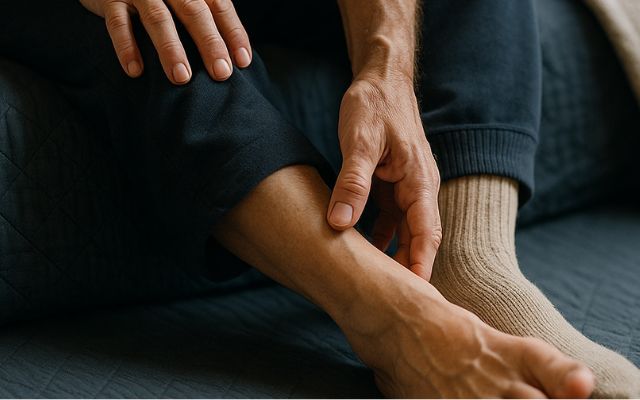
Neuropathy pain follows a daily biological rhythm. Pain intensity rises steadily from morning through evening and peaks in the late night. This pattern holds even when patients take pain medication around the clock. The nocturnal worsening is not a gap in medication. It is built into how the nervous system cycles through the day.
Several mechanisms drive this nighttime peak together:
Neuropathic pain has its own circadian rhythm, a biological daily cycle separate from pain caused by injury. Studies tracking pain intensity from 8:00 AM to 8:00 PM consistently show a progressive rise toward evening. This rhythm persists even on gabapentin and morphine, confirming it is a biological process and not undertreated pain.
At the chemical level, the body's natural pain-blocking compounds follow the same clock in reverse. Beta-endorphins, the brain's own pain relievers, are highest in the morning and lowest in the evening. As they drop, pain signals face less resistance.
During the day, movement, work, and conversation compete for your attention. At night, that competition disappears. With less sensory input coming in, the brain shifts focus to the pain signals already present. The pain has not gotten physically worse. It feels more intense because nothing else is competing with it.
This is compounded by the strong overlap between painful neuropathy, poor sleep, anxiety, and depression. Each one worsens the others in a reinforcing cycle.
Many patients with neuropathy in the feet develop allodynia, a condition where light touch that would normally feel harmless becomes painful. The weight of a bedsheet or the friction of socks against the skin can trigger a burning or electric sensation. Simply lying down in bed activates symptoms that were manageable while upright and moving.
Skin temperature drops at night as the body prepares for sleep. For patients with small-fiber neuropathy, where the nerves closest to the skin surface are most affected, this cooling can trigger or intensify burning pain. Poor circulation in the feet, common in diabetic neuropathy, compounds this further.
If your neuropathy symptoms change depending on how you lie down, spinal stenosis (narrowing of the spinal canal) may be contributing. When lying flat, the spine extends slightly and can compress nerve roots. This produces leg symptoms that ease when sitting up or leaning forward. Sleeping at a reclined angle or placing a pillow under the knees can reduce symptoms if spinal pressure is a factor.
Not everyone with neuropathy experiences the same degree of nocturnal worsening. Three groups tend to be most affected:
Painful diabetic neuropathy is the prototype for sleep-disrupting nighttime pain. The morning-to-evening rise in pain intensity is significantly more pronounced in diabetic neuropathy than in other neuropathic conditions. Nocturnal worsening has been a recognized feature of diabetic neuropathy since the 19th century.
Poor and variable blood sugar control makes it worse. Greater glucose variability increases both the frequency and severity of painful symptoms. Nights after days of unstable glucose levels tend to be significantly more painful.
The difference in pain intensity between morning and evening is consistently more pronounced in women than in men. This pattern holds across pooled analyses of both diabetic neuropathy and postherpetic neuralgia trials. The reasons are not fully established but likely involve hormonal influences on pain processing and circadian rhythm regulation.
Small-fiber neuropathy, where the thinnest nerve fibers near the skin surface are most damaged, produces superficial burning pain and allodynia that is most characteristic at night. About 75% of diabetic neuropathies involve this small-fiber pattern, and nocturnal worsening is often an early feature before the neuropathy becomes advanced.
Additional factors that amplify nighttime symptoms include obesity, high blood pressure, high cholesterol, smoking, and peripheral artery disease. All of these worsen the underlying nerve environment.
Relief starts with non-medication strategies, many of which address the specific mechanisms driving nighttime pain.
For diabetic neuropathy, stabilizing blood glucose is one of the most direct ways to reduce nighttime pain. Variable glucose, not just high glucose, increases symptom severity. Tighter control with fewer swings throughout the day reduces the nighttime burden significantly.
Topical lidocaine patches and capsaicin cream applied to affected areas before bed can reduce localized burning without systemic side effects. These are particularly useful for older patients or those already taking multiple medications.
Several first-line neuropathy medications are deliberately dosed at bedtime to align with the evening pain peak and to use their sedative effect constructively:
Timing medication to anticipate the evening rise is a rational strategy. However, the underlying circadian pattern of pain remains even with treatment. The goal is reducing peak intensity, not eliminating the rhythm entirely.
Neuropathy and poor sleep create a vicious cycle: pain disrupts sleep, and sleep loss lowers your pain threshold. To break this loop, address both the pain triggers and your sleep setup.
Topicals: Apply 4% lidocaine patches or capsaicin cream to painful areas before bed for localized relief without pill side effects.
Soothe: Try cool foot soaks, gentle massage, or low-intensity TENS units before lying down.
If symptoms change when lying flat, spinal compression may be involved.
Fix: Sleep on your side with a pillow between your knees, or at a slight incline, to reduce lower back pressure on nerve roots.

If neuropathy pain is disrupting your sleep regularly, that is a clinical problem worth evaluating. Poor sleep worsens pain perception, increases anxiety and depression, and accelerates functional decline. The cycle compounds itself if left unaddressed.
Universal Neurological Care evaluates neuropathy symptoms using on-site nerve testing to identify the type and severity of fiber involvement driving your nighttime pain. A targeted treatment plan addresses both the pain mechanism and the sleep disruption together. Schedule your evaluation and bring a log of when your symptoms peak, your current medications, and your insurance information.
Disclaimer: This content is for educational purposes only and does not replace a clinical evaluation or medical advice from a neurologist.
Not necessarily. Nighttime worsening is a built-in feature of neuropathic pain driven by circadian biology. It is not a reliable signal that nerve damage is progressing. However, if nighttime pain intensity is increasing over weeks or months, or if new symptoms are appearing, that warrants a clinical evaluation.
This is a common pattern in small-fiber neuropathy. Daytime activity provides competing sensory input that partially masks the burning. At night, with less sensory competition and lower body temperature, the damaged nerve fibers fire more prominently. Numbness and burning are not mutually exclusive. They reflect damage to different fiber types within the same nerve.
Yes. Sleep deprivation lowers the pain threshold and increases central pain amplification. There is also evidence that pain signals are reinforced during NREM sleep after nerve injury. Neuropathy disrupts sleep, and disrupted sleep worsens neuropathy perception. The relationship runs both ways.
For several first-line medications, yes. Tricyclic antidepressants and gabapentinoids are commonly dosed at bedtime to target the nocturnal pain peak and use their sedating effects constructively. Medication timing should always be decided with your prescribing physician based on your specific medication and overall health.
Yes, in some cases. If your symptoms vary depending on how you lie down, spinal stenosis contributing to nerve compression may be involved. A reclined position or pillow under the knees reduces spinal extension and can ease leg symptoms. A neurologist can determine whether a positional component is contributing to your nighttime pain.