TL;DR: A tonic clonic seizure (also called a grand mal seizure) is a seizure in which a person passes out, the body stiffens, and then the arms and legs jerk. Most last less than three minutes. Call 911 for a first seizure or any seizure that lasts five minutes or longer. A neurologist can help find the cause and tell you whether you need treatment.
Seeing someone have a seizure is frightening. It can also leave you with questions: Why did it happen? Will it happen again? A neurologist can check whether the seizure came from a short-term cause or from epilepsy. The answers help you plan treatment and know when it is safe to drive.
A tonic clonic seizure has two main phases, followed by a recovery period. It was once called a grand mal seizure.
The muscles suddenly stiffen. The person passes out and may fall. They may make a loud cry or groan as air is pushed out of the lungs. This phase usually lasts about 10 to 20 seconds.
The arms and legs jerk in a steady rhythm as the muscles tighten and relax. The jerking slows down and stops, usually within one to three minutes of the start of the seizure.
After the jerking stops, the brain needs time to recover. This is called the postictal state. The person may feel sleepy, confused, or very tired, and may have a headache. This can last minutes to hours. Many people do not remember the seizure.
Most seizures stop on their own within a few minutes. Some need emergency help. A seizure that lasts five minutes or longer, or seizures that happen back to back without the person waking up in between, is called status epilepticus. It is an emergency. The longer a seizure lasts, the higher the risk of brain injury, so treatment needs to start quickly.
Call 911 if:
Emergency teams can give medicine to stop a long seizure. Afterward, a neurologist can review the hospital findings, look for the cause, and help plan follow-up care.
Fainting can look like a seizure, but the cause and the tests are different. Fainting happens when blood flow to the brain suddenly drops, from low blood pressure or a heart rhythm problem. A faint can cause a few short jerks, called convulsive syncope. People often mistake these jerks for a seizure.
| What you notice | Tonic Clonic Seizure | Fainting |
|---|---|---|
| Before it starts | Sometimes no warning, or a strange feeling (aura) | Often dizziness, sweating, or nausea first |
| Movements | Steady, rhythmic jerking that can last a minute or more | A few short, uneven jerks |
| Waking up | Confused or sleepy for minutes to hours | Usually alert again fairly quickly |
| Biting the tongue | A bite on the side of the tongue is more common | Less common |
| Skin color | May look flushed or bluish | May look pale |
Losing control of the bladder can happen with both, so it does not tell them apart. If the cause is unclear, tests such as an ECG (a heart rhythm test) or autonomic nervous system testing can check your heart rhythm and blood pressure.
Another look-alike is a functional (psychogenic nonepileptic) seizure, which video-EEG monitoring can help identify. Neurologists and cardiologists often work together to find the cause.
Your neurologist will ask what happened, test your brain's electrical activity, and sometimes look at images of your brain. No single test gives every answer, so doctors usually put the results together.
A witness's description is very helpful, because many people do not remember the seizure. If you saw it, try to remember:
If it is safe, a short phone video can help your neurologist. Your neurologist will also ask about head injuries, family history, medicines, alcohol, and sleep.
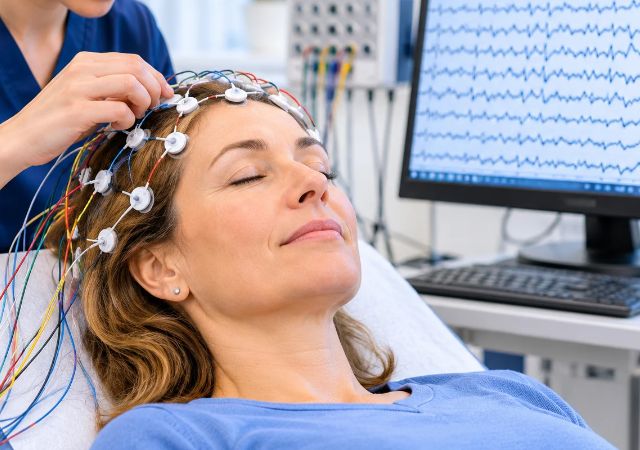
An EEG test records your brain's electrical activity and can show patterns linked to seizures. Small sensors are placed on your scalp, and the test is painless. A routine EEG usually takes between 20 minutes and an hour.
An EEG is usually done as soon as possible after a first seizure, ideally within 24 hours. A normal EEG does not rule out epilepsy, because the test only records the brain during that short time. If the result is normal but a seizure is still suspected, your neurologist may repeat the EEG or recommend a longer recording.
Universal Neurological Care offers routine EEGs in the office and ambulatory EEGs at home. An ambulatory EEG records your brain activity for a longer period while you go about your day, which gives more chances to catch seizure activity.
An MRI uses a magnet and radio waves, not radiation, to take detailed pictures of the brain. You lie still inside the scanner. It can show scar tissue, abnormal blood vessels, tumors, or damage from an old head injury that may cause seizures. Your neurologist can order an MRI after a first seizure.
Blood tests check for temporary triggers that can cause a seizure, such as low sodium or low blood sugar. If you already take an antiseizure medicine, a blood test can also check whether the level in your body is right.
Tonic clonic seizures are usually treated with daily antiseizure medicine, but after a first seizure, not everyone needs it right away. Your neurologist decides with you based on how likely another seizure is.

Not always. Starting medicine right away lowers the chance of another seizure over the next two years, but it does not improve long-term results. Your neurologist looks at your test results, your health history, and your risk of another seizure to help you decide.
Antiseizure medicines help control abnormal electrical activity in the brain. The goal is to prevent seizures with as few side effects as possible.
Some people still have seizures while taking medicine. If seizures continue after two appropriate medicines, your neurologist may suggest more testing, such as ambulatory EEG monitoring. They may also refer you to a comprehensive epilepsy center for video-EEG monitoring or a surgery evaluation.
Focus on keeping the person safe. You cannot stop a seizure by holding the person down or putting anything in their mouth.
Call 911 if the seizure lasts five minutes or longer, it is their first seizure, another seizure starts before they recover, they are hurt, they have trouble breathing, the seizure happens in water, or they are pregnant.
Seizures can cause injuries from falls, such as head injuries and broken bones. People with epilepsy also have a small risk of sudden unexpected death in epilepsy (SUDEP). It affects about 1 in 1,000 adults and 1 in 4,500 children with epilepsy each year. Tonic clonic seizures raise this risk, and staying free of them is linked to a lower risk. Missing medicine and sleeping alone can also add to the risk.
Taking your medicine as prescribed and following your neurologist's advice can lower the chance of more seizures. If you forget doses or still have seizures, tell your neurologist so they can adjust your plan.
Our neurologist in Jacksonville can help you understand your risks, manage treatment, and plan for seizure safety.
A seizure can affect your ability to drive. Florida may require a seizure-free period and a medical review before you can drive again. What applies to you depends on your situation and health history.
Check the current rules with the Florida Department of Highway Safety and Motor Vehicles. Your neurologist can provide the medical information the state needs.
After a seizure, a neurological evaluation can help find the cause, check the risk of another seizure, and decide whether you need treatment. Universal Neurological Care evaluates people with new-onset and complex seizure disorders, reviews emergency department findings, and offers EEG testing to help guide diagnosis and treatment.
Contact our office: schedule a seizure evaluation at 8823 San Jose Blvd., Suite 209, Jacksonville, FL 32217, or call (904) 404-7044.
Contact our office to discuss your specific situation. Please have these ready when you call:
Most last one to three minutes. Confusion and sleepiness afterward can last much longer. A seizure that lasts five minutes or more is an emergency.
No. It is not possible to swallow your own tongue. Never put anything in the mouth of someone who is having a seizure, because it can hurt their teeth or block their airway.
No. A single seizure with a clear trigger does not mean epilepsy. A high fever, severe alcohol withdrawal, or a head injury can cause a one-time seizure in an otherwise healthy brain. Epilepsy means a lasting tendency to have seizures without a trigger.
Yes. Grand mal is the older name. Doctors now say generalized tonic-clonic seizure, or focal-to-bilateral tonic-clonic seizure when a seizure starts in one area and spreads to both sides of the brain.
Florida may require a seizure-free period and a medical review, and the timeline depends on your situation. See the driving section above and check current rules with FLHSMV.