
Google logo
200+ Reviews

Electroencephalogram (EEG) Testing in Jacksonville, FL

Measure brain electrical activity to detect seizures

An electroencephalogram, commonly known as EEG testing, measures the electrical activity of the brain through sensors placed on the scalp. This diagnostic test is frequently used to evaluate seizures, epilepsy, and other neurological disorders that affect brain function. Patients seeking neurological evaluation in Jacksonville can undergo EEG testing through Universal Neurological Care to help physicians identify abnormal brainwave activity and guide treatment decisions.
Electroencephalogram

What Is an EEG?

An electroencephalogram, or EEG, is a diagnostic test that records the electrical activity of the brain using sensors placed on the scalp. It is commonly used to evaluate seizures, epilepsy, abnormal brain activity, blackouts, or changes in neurological function. The test helps physicians look for irregular brainwave patterns that may not be visible on standard imaging alone. Patients with suspected seizure disorders or unexplained neurological symptoms may be evaluated through our neurology clinic before or after EEG testing.
Conditions EEG Testing May Help Evaluate

Epilepsy

Seizure Disorders

Blackout Episodes

Altered Consciousness

Suspected Seizures

Brain Injury

Abnormal Brain Activity

Unexplained Spells

Neurological Disorders

What to Expect During EEG Testing

Patients referred for EEG testing often experience seizures, unexplained blackouts, memory lapses, unusual movements, or sudden changes in awareness. These symptoms can be frightening and disruptive to daily life. Before the test, clinicians review neurological symptoms and provide instructions regarding medications or stimulants that may affect results.
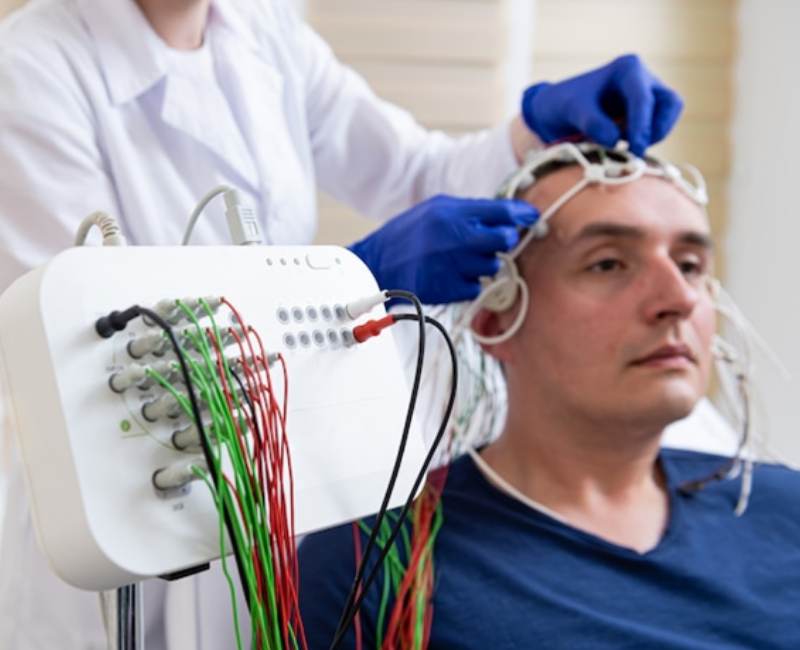
During the procedure, small sensors are placed on the scalp to record the brain’s electrical activity. Patients may be asked to rest, breathe deeply, or respond to visual stimuli while the brainwave patterns are recorded. The test itself is painless and typically lasts between 30 and 60 minutes.
After testing, neurologists analyze the recorded brainwave patterns to identify abnormal electrical activity. The results help guide diagnosis and treatment planning for seizure disorders, epilepsy, or other neurological conditions.
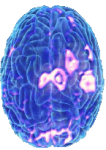
Depressed Brain
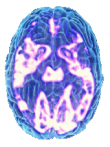
Non-Depressed Brain
Source: Mark George M.D., Biological Psychiatry Branch Division of Intramural Research Programs, NIMH 1993.

Safety and Effectiveness of EEG Testing

Non-Invasive Brain Monitoring

EEG uses sensors placed on the scalp to record brain electrical activity without surgery or radiation, making it a safe neurological diagnostic test.
TMS therapy

Reliable Seizure Detection

The test helps physicians identify abnormal brainwave patterns associated with epilepsy, seizures, and other neurological disorders.

Valuable Neurological Insight

EEG results guide neurologists in diagnosing brain activity abnormalities and planning appropriate treatment strategies.

Why Choose Universal Neurocare


EEG results are only as useful as the clinical context behind them. Our Northeast Florida neurologists interpret brainwave recordings alongside each patient's symptoms, medical background, and neurological examination, not in isolation. This means subtle abnormalities tied to seizure disorders or unexplained neurological symptoms are far less likely to be missed.

Testing happens within a dedicated neurological environment where clinicians regularly evaluate seizures, altered consciousness, and complex brain activity patterns. That clinical familiarity matters when accuracy is everything.

Because diagnostic results are immediately folded into treatment planning, patients leave with a clear path forward, whether that means further testing, ongoing monitoring, or a therapeutic plan.



NeuroStar TMS Therapy

Diagnostic Procedures

Therapeutic Procedures

TBI Rehabilitation

FAQS

Electroencephalogram (EEG)
EEG testing is one of the most commonly used neurological diagnostic tools for evaluating brain activity. Patients often have questions about how the test works, what conditions it can diagnose, and what to expect during the procedure.
An electroencephalogram (EEG) measures the electrical activity produced by brain cells. Neurons communicate using electrical signals, and EEG sensors placed on the scalp record these signals to detect patterns that may indicate neurological abnormalities. Physicians often use EEG testing to investigate seizures, epilepsy, unexplained loss of consciousness, sleep disorders, and other neurological conditions affecting brain function.
No. EEG testing is completely non-invasive and painless. Small sensors called electrodes are placed on the scalp using a conductive gel. These electrodes simply record electrical signals from the brain and do not deliver electricity into the body. Most patients find the procedure comfortable and safe.
Patients searching for an EEG test near me should consider clinics that specialize in neurological diagnostics so results can be interpreted by experienced neurologists. In Jacksonville, Florida, patients can contact Universal Neurological Care, where EEG testing is performed as part of a comprehensive neurological evaluation program.

Electroencephalogram (EEG)

Need accurate brain activity testing? Book your EEG appointment today for precise neurological evaluation and diagnosis from experienced specialists.
chevron-down