TL;DR
Photobiomodulation (PBM) and red light therapy refer to the same underlying technology, the use of red and near-infrared light at low power densities to produce biological effects on cells and tissues.
"Photobiomodulation" is the scientific and clinical term, while "red light therapy" is a consumer-facing term. The key differences lie in device quality, treatment protocols, clinical oversight, and the conditions being targeted.
If you have been researching non-invasive wellness therapies, you may have come across the terms "photobiomodulation" and "red light therapy." While the terms are often used interchangeably, understanding the context in which each is used can help patients and caregivers make more informed decisions.
Photobiomodulation (PBM), previously known as low-level laser therapy (LLLT), is the standardized scientific term for therapies that use red or near-infrared light at low, non-thermal doses to modulate cellular processes. "Red light therapy" is a broader, consumer-oriented term that describes the same underlying phenomenon but is more commonly associated with at-home devices and wellness applications.
In this article, we'll explain what each term means, where they overlap, and when clinical-grade PBM may be more appropriate than consumer red light therapy devices.
Photobiomodulation (PBM) is the scientific term for a light-based therapy that uses specific wavelengths of red (620-700 nm) or near-infrared (700-1440 nm) light at low, non-thermal power densities to stimulate cellular function.
The primary mechanism involves the absorption of photons by mitochondrial cytochrome c oxidase (CCO), leading to increased ATP synthesis, modulation of reactive oxygen species, and alterations in intracellular calcium levels. These changes activate downstream signaling pathways that influence cellular proliferation, migration, and differentiation.
PBM has established clinical evidence for the following:
For neurological applications, transcranial PBM (tPBM) is an active area of research with promising but preliminary results. Early studies suggest potential benefits for cognitive function in mild cognitive impairment and traumatic brain injury, but large confirmatory randomized controlled trials are still needed. PBM does not currently have FDA clearance for any neurological indication.
Unlike general consumer devices, clinical PBM uses carefully calibrated parameters (wavelength, irradiance, fluence, treatment duration) and is often professionally supervised.
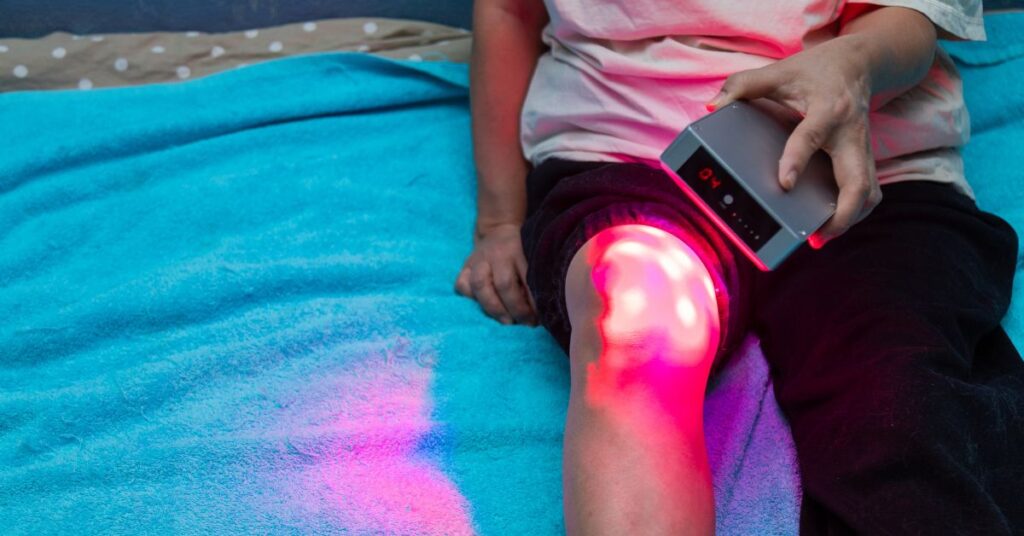
Red light therapy is a consumer-facing term used to describe treatments that expose the body to low-level red or near-infrared light.
It uses the same underlying mechanism as photobiomodulation, stimulation of mitochondrial cytochrome c oxidase, but the term is more commonly associated with at-home devices and wellness applications.
Red light therapy devices are commonly promoted for:
Many at-home devices fall under this category. However, device quality, wavelength precision, power output, and treatment protocols can vary significantly between products. It remains unclear whether LED-based consumer devices produce physiologic effects comparable to the laser-based systems used in most higher-quality clinical studies.
Patients seeking advanced, non-invasive neurological support may explore photobiomodulation therapy for brain wellness and recovery as part of a comprehensive care plan.
The main difference between photobiomodulation and red light therapy is not the therapy itself, but the terminology, clinical context, and device quality.
| Feature | Clinical Photobiomodulation | Consumer Red Light Therapy |
| Terminology | Standardized scientific term | Consumer/marketing term |
| Underlying Mechanism | Cytochrome c oxidase stimulation | Same mechanism |
| Light Wavelengths | Carefully calibrated (typically 600-700 nm and 780-1100 nm) | Varies by device |
| Device Quality | Medical-grade, calibrated parameters | Variable; often unregulated |
| Common Settings | Medical clinics, research settings | Home devices, spas, wellness centers |
| Oversight | Professionally supervised | Frequently self-administered |
| Evidence Base | Established for specific conditions | Limited clinical trial data for consumer devices |
Both photobiomodulation and red light therapy:
Because the underlying technology is identical, the terms are often used interchangeably. Clinical providers typically use "photobiomodulation" to denote a more structured, protocol-driven therapeutic application.
Patients exploring supportive neurological therapies may also benefit from learning about non-invasive TMS therapy for cognitive and emotional wellness as part of a comprehensive care approach.
Choosing between clinical PBM and consumer red light therapy depends on a person's goals, symptoms, and overall care needs.
A professional evaluation may consider:
In clinical settings, PBM is often integrated into a larger care strategy with specific dosimetry (wavelength, irradiance, fluence, and treatment duration) rather than used as a standalone wellness treatment.
Consumer Red Light Therapy May Be Appropriate For:
Clinical Photobiomodulation May Be More Appropriate For:
A healthcare professional can help determine whether clinical PBM or consumer red light therapy better aligns with a patient's needs.

Understanding the difference between clinical PBM and consumer red light therapy helps patients make safer and more informed care decisions.
Early education and professional guidance may help:
It may be helpful to seek professional guidance if you are:
Professional evaluation can help clarify goals, review treatment options, and determine whether clinical PBM may be appropriate.
PBM is generally considered safe and well-tolerated. A 2025 evidence-based consensus found PBM to be a safe treatment modality for adult patients and confirmed that red light PBM does not induce DNA damage. However, individuals taking photosensitizing medications or with specific light sensitivities should consult a healthcare provider. Regarding cancer, current evidence suggests PBM is safe for managing cancer treatment side effects (such as oral mucositis), though caution is warranted as some preclinical studies have shown wavelength-dependent effects on certain tumor types.
"Red light therapy" and "photobiomodulation" describe the same technology. The most appropriate option depends on a person's health goals and symptoms. For conditions with established evidence (such as peripheral neuropathy, wound healing, or androgenic alopecia), clinical-grade PBM with calibrated devices and professional oversight may provide more reliable results than consumer devices.
Available research does not support this claim. Studies examining the effects of different light wavelengths on cortisol have found that red light exposure does not significantly affect cortisol levels. Bright white light and blue light have been shown to increase cortisol, while red light showed no significant effect compared to controls.
Preclinical evidence supports that red light (630-660 nm) promotes wound healing through increased collagen synthesis, VEGF-mediated angiogenesis, and anti-inflammatory effects. However, clinical evidence in humans remains limited, and results depend on the specific parameters used, wound severity, and overall health.
PBM is generally considered non-invasive and well-tolerated when performed with appropriate parameters. The most common adverse effect is mild, self-limiting erythema. Professional supervision helps ensure safe protocols and proper treatment settings.
Photobiomodulation and red light therapy are not two different therapies — they describe the same underlying technology using different terminology.
Key points to remember:
Book a strategy call with Universal Neurological Care to discuss personalized care pathways and treatment options.